Showing posts with label useful url. Show all posts

Wednesday, October 16, 2013

Monday, September 23, 2013

Marla Spivak: Why bees are disappearing


A great understanding of the effects of disturbances in biodiversity.

Page Division for text using Canons

The written content for the storybook exceeds 4000 words, making it text heavy. For that purpose, it makes it important for layout to be able to occasionally accommodate large chunks of text. The Canons, an ancient technique of page division, were a rule of thumb applied to the layout for harmonious division.

Let's see how this works on the page size chosen for this storybook.

To begin with, I was advised to design the storybook with the potential to be printed in offset. In the future, if we find the opportunity to print it in large numbers, offset printing is the cost effective way to do it and the layout should be according to a standard offset paper size.

The one-fourth demy paper size is suitable for a medium sized storybook for a mature audience, that is easy to carry around and store. Adhering to a standard paper-size also leads to the least amount of wastage of paper after cropping. The paper size finally chosen was 170 mm x 240 mm - a little short of the one-fourth demy.

The best way to visualize the book size is to draw it out on paper first and crop it to the original size. It helps one fold the spread along the spine and actualize the dimensions. Doing this led to three iterations before settling for the final size. 


Next, the canon was drawn on the spread to create the smaller boxes as the text distribution area. Applying a canons to a spread invariably leads to a smaller upper margin and larger lower margin, not making the text seem bottom-heavy or too much on the page. Canons lead to sufficient thumb space in the outer margins and an appropriate space in the inner margins to create a gutter for the spine allowing the book to be perfect bound, yet not lose text by bleeding it into the spine.

The best part is that Canons do so without the need to measure and calculate the space needed to meet the properties of thumb space and spine gutter. Moreover, the text area is proportionate to the actual page size. 
In this particular layout, the Honnecourt Canon has been used and tweaked slightly, yet the proportion is the same. Here's what it looks like.


Even though the type will be contained within the smaller rectangles, it can still be placed playfully. The images will break this grid to create interest and dynamism.

Monday, August 19, 2013

Character Explorations and possible Story Structures.

To weave together all the themes related to biodiversity into one narrative, I needed to look at possible story structures and interesting characters who can play a role in illustrating this information.

The first option was to have personas of various human key-players who can take us through the scenarios : a farmer, a doctor, a house-holder, a scientist. But this is the most predictable path to take, as my advisors say. The story can take a million other shapes and could be through the perspective of something inanimate or non-human. This was the next area to explore.

The story structures that I explored were:

See, Think, Wonder : This one's actually a Design Tool for visible thinking. But it can be a great way to create a reflective narrative in first person through a protagonist who witnesses a change.

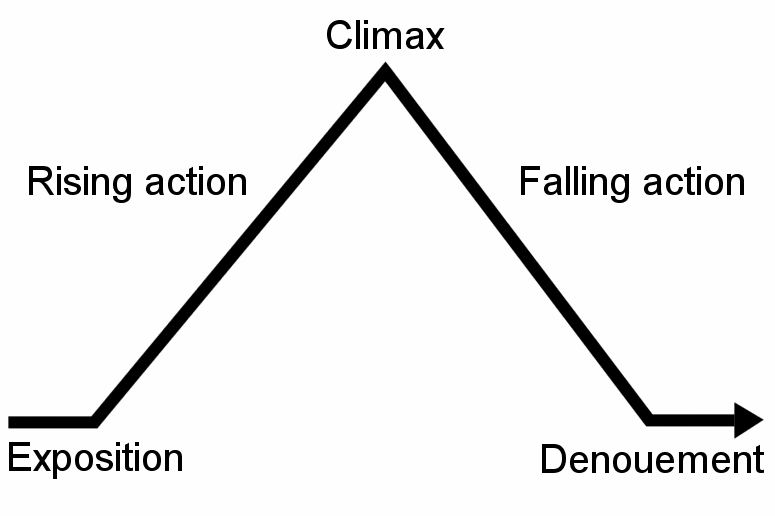
The Monomyth : Or the Hero's Journey by Joseph Campbell is one of the most common and legendary narrative structures. that follows the protagonist as he embarks upon a journey, through his obstacles to see him emerge victorious and return to his world, having eveolved spiritually.

The Short Story : The structure of a short story is debatable, ranging from this to this or even this one here.
The common thread in these, as one can see is the presence of peaks and falls, a heightening of drama and mystery which is then solved to take the reader through an exciting turn of events in the short span of the story, something common even in the world's greatest and most effective speeches, as observed by Nancy Duarte in this video.

Here's what came out of this thought process :


Wednesday, August 14, 2013

Conversations

The kind of agriculture being practiced in the country can be largely classified under non-organic farming that involves usage of genetically modified seeds, chemical pesticides and fertilizers and farming that is done organically, the former being the one that is more widely preferred.

Non-organic / synthetic farming is chemical intensive and cultivates monocultures for the benefit of harvesting a greater produce and getting government subsidies. Organic farming, on the other hand, uses no chemical based pesticides or fertilizers but is not supported by government subsidies. The importance of biodiverse farming where nutrients from one crop benefit the ones around it, is one that cannot be appreciated by chemical aided farming. Non-organic farms work towards the growth of a single crop by eliminating the growth of other native or seasonal varieties, poisoning the soil and affecting microbes and insects who form the biodiversity on the farm.

Organic farming is directed towards the use of natural means to meet the needs of pest-control and fertilization of the soil. Biodiversity is a benefit for organic farming through mixed farming as it provides a balanced environment in the farm where different crops support each other around the year, the farmer benefits from a fall back crop in case of a poor harvest of the cash crop and pests are controlled by their predators. What can be inferred from this is how biodiversity can be promoted along with organic farming. To understand if biodiversity is prevalent in organic farming, I decided to look at the organic food system.

Organic food minimizes processing, additives and preservatives. However, it is more expensive as the production costs of organic farming is high and is labour intensive. Though it is recommended for its nutritional values and sustainable principles, organic produce is only afforded and consumed by the higher and upper-middle classes. It was only among these classes that I was able to identify the prevalence of organic food and could discuss the inclusion of biodiversity in their processes:


Places and People:
Fabindia Organics, CMH Road, Indiranagar, Bangalore.
One of the most popular names in organic food in India, Fabindia call their system Inclusive Capitalism, one that gives a fair share of the profit to the farmers and producers. Fabindia introduced me to organic certification.

Phalada Agro Research, Magadi Road, Bangalore.
Phalada Agro process and package the food products sold by Fabindia, 24 Letter Mantra and other organic food industries. Their website mentions a traceability option through which one can get in touch with farmers. Their initiative strives towards "contributing towards the conservation and restoration of biodiversity."

The Farmer's Market - Indiranagar, Bangalore.
The market was a congregation of people who grow and produce organic food and lifestyle products and is held once a month in Indiranagar. I was able to speak to Vishaklakshi of Buffalo Back Organics, who has broken the myth that organic farming cannot meet the productivity attained by non-organic farming. She collaborates with several farmers who maintain biodiverse, organic farms and markets them under her brand.

John Fennessy runs Hamsah Organic Farm in Sarjapur, Bangalore and after the first year of low productivity, his patience was rewarded with a great, green bounty in the years to follow. According to him, his only pest-control is biodiversity. The farm has developed an eco-system in which each pest has it's own predator and the produce does not suffer. He uses herbal pesticides such as neem extract instead of chemicals.

Finally, Govind Shivkumar, Investment Manager at LGT Venture Philantrophy, had lots of useful information to share about consumption patterns in cities. He maintains that it is not a matter of quantity but quality of food that affects the health and well-being of city dwellers. Processed food is largely consumed while horticulture is in the decline. Farm area around cities that was used for growing fruits and vegetables is now being used for building townships. As a result, fresh fruits and vegetables are absent from our daily consumption and are sold at prices that cannot be afforded by all.

Here's a gist of all that I could gather from these conversations:


These opinions, experiences and insights will be most useful in shaping the stories as examples of how biodiversity can become part of industry, livelihood and lifestyle in the city. Living with bio-diversity is not that hard to achieve, it is merely a matter of how we choose to shape our food systems.

Tuesday, August 13, 2013

Consumption Patterns

A simple way of understanding the link between us and the food we eat is to observe the forces involved:
There is no particular stage that controls what is grown and what is eaten, it can be seen as a dynamic system. What we demand as consumers is what the farmer is compelled to grow and the market to supply.
On the other hand, we can only stock up in our cellars what is available in the market. A useful way to observe this system and how it affects society is through consumption patterns, in which all three forces are visible. To achieve this I accessed the National Sample Survey of India and various articles and discussions such as this one that observe the changing habits and patterns in our food consumption.

One of the main inferences from the NSSO was the fall in demand for coarse cereals (ragi, jowar, bajra, millets) observed across all classes in society. Also, there is a shift towards processed food among both rural and urban consumers as the consumption of fresh vegetables and fruits has declined. Without a doubt, the change in food consumption has an effect on the health and well-being of society. The coarse cereals have served as a source of micro-nutrients in various forms across India. Fresh fruits and vegetables are the only natural source for vitamins and minerals, the deficiencies of which are evident among the lower class who cannot afford to purchase them. And processed food, rich in sugar, salt, fat and preservatives has shown its impact through rise in cardiac diseases, diabetes and obesity.

A healthy, balanced diet is one that involves an intake of a variety of foods in their appropriate portions. As important as diversity is in nature, it is vital in our diet in the form of Dietary Diversity. Our country, with its varied soil and climate distribution can cultivate this diversity and meet our dietary needs. However, the ill-health rampant in the country stand witness to the fact that there is great disparity in accessibility to a healthy diet. A monoculture diet as opposed to a diverse diet can be observed in all classes of society. For one, rice and wheat have become the only cereals that are widely consumed. Not only do they fail to compensate for the nutritional value of millets, they are also expensive to become a part of the households of economically weak.
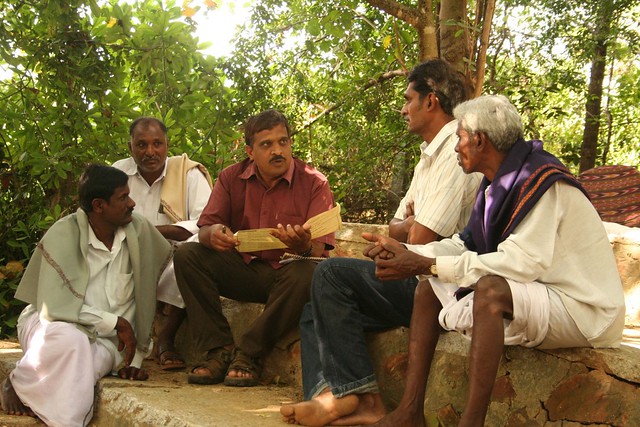
 The matter of concern is that the availability of millets and the land usage for their cultivation is diminishing. At a political level, the Public Distribution System largely distributes only rice and wheat as cereals, forcing a monoculture in both the fields and the diet. The conservation of millets and their consumption on a larger scale is a necessity to maintain agrobiodiversity. Millets have a greater capacity to grow in harsh conditions as opposed to rice and wheat that require continuous irrigation and fertilizers to grow as a monoculture in incompatible conditions.

In recent times, millets are being promoted and revived (read here) in an attempt to draw attention to their health benefits and decline in consumption. They are also emerging as a trend among the elite and the health conscious, at higher prices. As can be read in this article, it is a foolish act on our parts to have forgotten the importance of a diverse diet and the richness of millets, and instead turn first towards cereals rich in sugars and carbs and then towards expensive health fads when the answer to well being was always the inclusion of the array of millets that our land has to offer. To really appreciate the change in diet over the years, here's a blogpost worth reading.

Tuesday, August 6, 2013

Visit to NBA, Chennai

On the 15th of July, 2013, the Communicating Biodiversity team* visited the National Biodiversity office in Chennai. The meeting gave us a great overview of the kind of initiatives that are being taken for the preservation of the country's biodiversity. The current focus is strengthening the implementation of the Biological Diversity Act and Rules with focus on its Access and Benefit Sharing (ABS)Provisions through the UNEP-GEF and MoEF Project. 

We were fortunate to speak to the individuals, including the Chairman, Mr. Balakrishna Pisupati, about their initiatives and could gather many interesting facts about Biodiversity Management.

For one, the NBA has undertaken an exhaustive valuation of the countries biological resources by engaging and training village youth, traditional healers, womenfolk and local communities to identify and record the biodiversity in their vicinity in Peoples Biodiversity Registers.

It was note-worthy to see how Biodiversity was being geographically categorized under Wetlands, Forests and Agriculture to define the various ecosystems. Culturally, Biodiversity was identified in medicinal herbs, sacred groves and seasonal plants. Even though valuation focuses on the economic value of Biological Resources, their health and nutrition benefits were also highlighted. It was made visible to us how various livelihoods and practices are closely  linked with their ecology. The importance and vastness of the country's Biodoversity could be appreciated in just listening to the various details that the NBA initiatives cover. 

As for the Communicating Biodiversity project, we were given the freedom to explore various forms, narratives, subjects as long as we did it with sensitivity and empathy. The power of storytelling as a mode of communication is something that the NBA believes in and Dr. Balakrishna gave us several examples of how innovative communication such as board games or textbooks created from People's Biodiversity Registers can enhance people's understanding and interest in the subject of Biodiversity.

For us, it was extremely motivating to see their interest and enthusiasm in designing new modes of communication. Which leaves us with the responsibility of delivering something that does justice to this freedom. The task now is to pick the right themes, choose the appropriate form and design a powerful story.


* You can view the progress of the animation being created for the project on Harshvardhan's blog http://backyard-biodiversity.blogspot.in/

Monday, August 5, 2013

Movements that Inspire - Food Democracy

Food Democracy is a concept that brings together farmers, concerned citizens and agricultural scientists. It defines a framework in which the people of a country actively participate in the food system and the policies that surround it. The movement began in the mid-1990s as a response to the increasing corporate control and lack of consumer participation in the food system. To relate this back to biodiversity, it allows farmers to grow local varieties that are otherwise lost in cultivating monocultures, it gives the people the right to say no to genetically modified species and gives them control over traditional knowledge and can choose the direction in which agricultural research should head. Conserving biodiversity thus becomes a collective responsibility, guided by the concern of healthy lifestyles and balanced eco-systems on the farm.


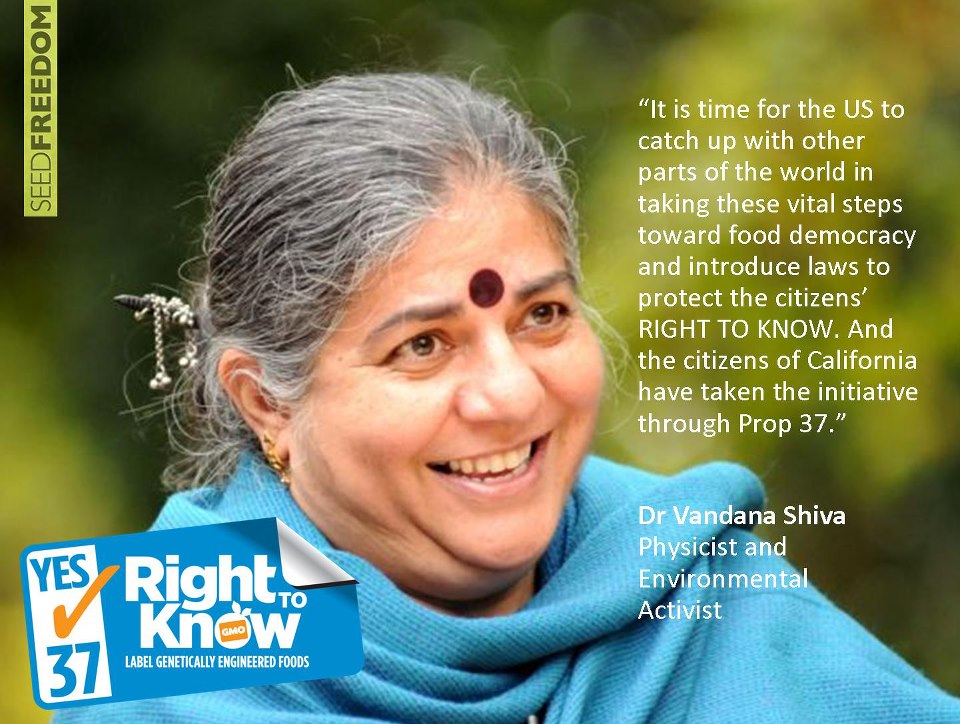
In India,Vandana Shiva is the ambassador for agro-biodiversity and food democracy. Her foundation Navdanya, provides the farmers from the foothills of the Himalayas to conserve plant species in a seed-bank, gives them the opportunity to practice bio-diverse farming and has set up learning centers where traditional and innovative knowledge is exchanged. They have also empowered women across generations, who are the custodians of cultural knowledge and wisdom through the Grandmother's University.


A global initiative that one can draw inspiration from is Excluded Voices. Their food democracy movements across the globe have brought farmers and agricultural scientists together to share knowledge and opinions about the future of agriculture. Participatory videos and maps helped the farmer groups document traditional methods of farming  and endemic varieties of plants and animals. They used role play to understand perspectives of key players in the food production system. Citizen Juries help create a collective voice that demands food sovereignty. They even brought together farmer groups from various countries as a gesture of solidarity and pride. 

Sunday, August 4, 2013

India and Biodiversity

To gain insights about the discussions that surround Biodiversity in India, I read Ashish Kothari's Understanding Biodiversity. The text gives a detailed background of Biodiversity management in India, the threats to Biodiversity and what measures have already been taken. It was a great way of understanding the subject with respect to the diversity that our country harbours based on availability of resources, various livelihoods, cultural differences, disparity in class and addresses the debate on Intellectual Property Rights on traditional knowledge. The book also cites examples of inspiring people and movements that have preserved and maintained biological diversity in India.

A comprehensive and concisely written study on the ecological issues in India from the National, Urban and Agricultural perspectives is Anil Agarwal's Politics of Environment. The study helped me identify a few topics that can be explored further.

The topics identified were:

Diversity gets transformed into Monocultures. This can be said for the cultural diversity in cities and the biological diversity in farms. Furthermore, cultural diversity is born out of biological diversity.

Urban migrants are not economic refugees but ecological refugees, displaced by building of dams, mining, deforestation, etc.

The biggest ally for an ecologically / socially sound environment is Womankind.

We do not yet know how to construct a social / economic / ecological indicator for urban residents to detect depleting biodiversity.

Of these topics, one will be explored further to shape the narrative of the storybook.

Saturday, August 3, 2013

Biodiversity- The Context

How can the two subjects of Biodiversity and the Urban audience be brought on the same plane?
Let's look at the 3 main objectives that various biodiversity conventions and organizations stress upon.

CONSERVATION : The biggest threat to biodiversity is how forest cover, wetlands and farms are stripped down to make way for urbanization without conservation of the species who inhabit these areas. We are losing species at 1000-10,000 times the natural rate of extinction, dangerously affecting the interdependence of various species. Not only this, we are also controlling the natural variability through genetic modification and promoting the development of only a few varieties of a certain plant or animal. Raising monocultures to increase productivity, eliminates diversity.

SUSTAINABILITY : There is a great disparity in the rate at which we consume biological resources and the rat at which these resources replenish themselves. The biggest consumers of energy and raw natural material are cities and industries. Exploitation of resources for development in a manner that leaves no sustenance for the future exhausts natural resources and threatens biodiversity.

ACCESS AND BENEFIT SHARING : Traditional knowledge about plants and animals, that is protected and preserved by indigenous tribes and farmers is patented and used for commercial means by capital powers, often providing no profit or access to the rightful custodians. When urban consumers promote the commercial use of such products, we put the power of controlling diversity in a few hands. 

Here's a map that identifies the various facets that define the context of this project


Monday, July 29, 2013

Why a storybook?

Since its establishment in 2003, NBA has produced several publications that can be accessed by the public. However, these modes of communicating biodiversity have a rigid informational structure. The representation of biodiversity currently is mainly through facts and quantitative data through jargon that may not engage the wider public.

This leaves the need for the wider public to assume their roles in the web of biodiversity unfulfilled. Endangerment of natural resources is caused by consumers who cannot wholly perceive this destruction psychologically. The vast network that is woven around biological resources makes it “humanly impossible for distant consumers to appreciate what their purchasing power is doing to distant areas.” (Anil Agarwal, Politics of Environment). The importance of our choices as consumers and its impact on biodiversity remains yet to be addressed in a digestible and effective form. We remain indifferent to the wide spectrum of reactions that occurs across all sections of society with the slightest change in biodiversity. 


Storytelling is an integral part of how we develop as people and as a civilization by carrying information, cultural code and wisdom.To bead together information in a narrative form is a primal and effective mode of communication and is a practice that pervades all cultures. It goes back to sitting around a bonfire and listening to the elders relate their experiences, packed with wit and metaphors. In this way, stories help connect people.

The power of stories has been identified as having a “high-concept, high-touch essence” by cognitive scientist Don Norman and storytelling has been identified as one of the six fundamental human abilities essential for professional and personal fulfillment by Daniel H. Pink in his book, A Whole New Mindpacking this tool with the potential  to empower its user.

A storybook gives readers characters that they can relate to, scenarios that trigger their imagination and situations that allows them to think alternatively or derive meanings from.

Most importantly, the stories need to be relevant and successful in portraying Biodiversity (and the lack of it) in the lives of the readers and reflect the world around them in its narrative. Only then can we evoke empathy and interest in the matter. Our greatest inspiration can be drawn from the following quote by John Steinbecks:

“If a story is not about the hearer he will not listen . . . A great lasting story is about everyone or it will not last. The strange and foreign is not interesting--only the deeply personal and familiar.”


Sunday, July 28, 2013

Introduction - The Biodiversity Storybook

Welcome to the Communicating Biodiversity Project.

The Earth is benevolent and shares with us a dynamic and ever-transforming relationship. It sustains life in countless forms, allowing some to develop and evolve and others to slip into non-existence, embedding new lessons in the fabric of life everyday. Change is as certain as the fruit after the withering flower.

For centuries, we have held fast to our place in the complex web of  interdependence that nature spins. We have lost and found our footing innumerable times. We have survived and embraced nature's diverse conditions, responding to them with dexterity and giving birth to various cultures.

Yet today, mankind's role in nature seems to be one where we hold the pendulum of change, felling anything that might come in the way as it swings between destruction and development. Not only have we found our footing, we have invaded into the territory of other lifeforms in the web. The rate at which modernization is affecting biodiversity is alarming, as is the indifference or lack of concern on our part.We willingly partake in the fruits of development but not in the responsibility to undo its damage.

The role of design in communicating the importance of biodiversity is something that we will try to explore through this project. Do those of us who live in cities and lead an urban lifestyle consider biodiversity too remote a problem? Instead, do the choices we make, our consumption patterns and our outlook towards natural resources define which and how many species we will share the planet with in the future?
The project Communicating Biodiversity will try to address these issues in the form of a storybook, created for the National Biodiversity Authority of India. The project is housed in the Law Environment Design Lab (LED Lab) as my diploma project at Srishti School of Art, Design and Technology.

Here's to getting to the bottom of a very tangled subject, which is far bigger than all of us, and surfacing with stories about our ongoing struggle to maintain the harmony of biodiversity. Do keep a bookmark handy = )