Showing posts with label storytelling. Show all posts

Monday, September 23, 2013

Illustration Style Explorations

Here's a look at the possible directions in which the illustration style can head:


Silhouettes in water colour
well defined, coloured illustrations in water colour and pen
using textures as cut outs with silhouettes


black and white, silhouettes


well defined, detailed, black and white strokes.

The Plot

Here's a graph that charts the plot of the storybook, dividing it between the journey of the monkey through the entire timeline, interspersed with the accounts of the other characters.


Tuesday, August 27, 2013

Concept Development - Meet The Characters

Here are the characters, the witnesses and marginalized species who reside in and around urban environments and are affected by the way cities distance themselves from biodiversity and move towards monocultures. Along with the personality and significance of the characters, the excerpts from the stories illustrates their role and perspective in this scenario :


Concept Development - The Stories

"Stop digging your nose in research. Start writing. Be silly"

That was some much needed advice that I received in the last seminar. Even though research and reading can go on forever, it needs to take a backseat now and the process of concept development has to begin.


Here are the ABC's of what the stories require:

The concept 
The storybook weaves together a narrative made up of the accounts of various species that have been witness to or marginalized by the depletion of biodiversity in and around urban environments.


The setting
The stories are set in a landscape that spans across a peri-urban landfill, the farms that produce food for the city and the city itself. 


The Tone
The tales are from the perspective of the various animate and inanimate witnesses. They will try to evoke empathy and curiosity in subjects that are complex yet relevant to the lives of an urban audience. The tone will be casual, satirical and descriptive.

Monday, August 19, 2013

Character Explorations and possible Story Structures.

To weave together all the themes related to biodiversity into one narrative, I needed to look at possible story structures and interesting characters who can play a role in illustrating this information.

The first option was to have personas of various human key-players who can take us through the scenarios : a farmer, a doctor, a house-holder, a scientist. But this is the most predictable path to take, as my advisors say. The story can take a million other shapes and could be through the perspective of something inanimate or non-human. This was the next area to explore.

The story structures that I explored were:

See, Think, Wonder : This one's actually a Design Tool for visible thinking. But it can be a great way to create a reflective narrative in first person through a protagonist who witnesses a change.

The Monomyth : Or the Hero's Journey by Joseph Campbell is one of the most common and legendary narrative structures. that follows the protagonist as he embarks upon a journey, through his obstacles to see him emerge victorious and return to his world, having eveolved spiritually.

The Short Story : The structure of a short story is debatable, ranging from this to this or even this one here.
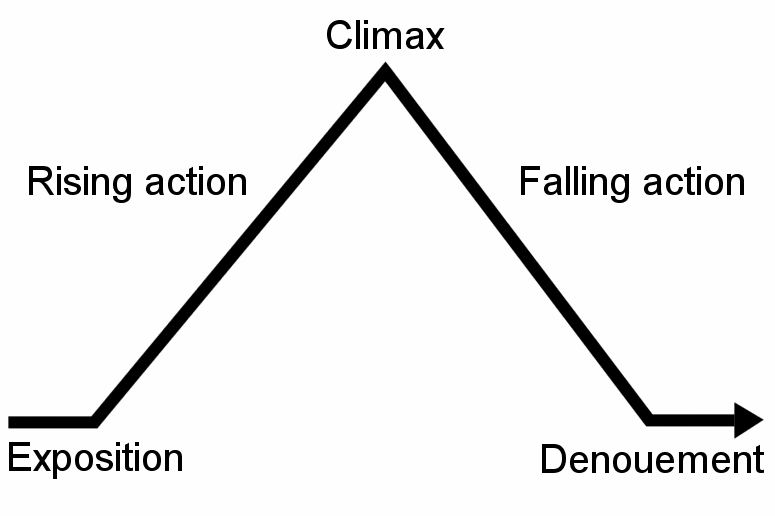
The common thread in these, as one can see is the presence of peaks and falls, a heightening of drama and mystery which is then solved to take the reader through an exciting turn of events in the short span of the story, something common even in the world's greatest and most effective speeches, as observed by Nancy Duarte in this video.

Here's what came out of this thought process :


Monday, July 29, 2013

Why a storybook?

Since its establishment in 2003, NBA has produced several publications that can be accessed by the public. However, these modes of communicating biodiversity have a rigid informational structure. The representation of biodiversity currently is mainly through facts and quantitative data through jargon that may not engage the wider public.

This leaves the need for the wider public to assume their roles in the web of biodiversity unfulfilled. Endangerment of natural resources is caused by consumers who cannot wholly perceive this destruction psychologically. The vast network that is woven around biological resources makes it “humanly impossible for distant consumers to appreciate what their purchasing power is doing to distant areas.” (Anil Agarwal, Politics of Environment). The importance of our choices as consumers and its impact on biodiversity remains yet to be addressed in a digestible and effective form. We remain indifferent to the wide spectrum of reactions that occurs across all sections of society with the slightest change in biodiversity. 


Storytelling is an integral part of how we develop as people and as a civilization by carrying information, cultural code and wisdom.To bead together information in a narrative form is a primal and effective mode of communication and is a practice that pervades all cultures. It goes back to sitting around a bonfire and listening to the elders relate their experiences, packed with wit and metaphors. In this way, stories help connect people.

The power of stories has been identified as having a “high-concept, high-touch essence” by cognitive scientist Don Norman and storytelling has been identified as one of the six fundamental human abilities essential for professional and personal fulfillment by Daniel H. Pink in his book, A Whole New Mindpacking this tool with the potential  to empower its user.

A storybook gives readers characters that they can relate to, scenarios that trigger their imagination and situations that allows them to think alternatively or derive meanings from.

Most importantly, the stories need to be relevant and successful in portraying Biodiversity (and the lack of it) in the lives of the readers and reflect the world around them in its narrative. Only then can we evoke empathy and interest in the matter. Our greatest inspiration can be drawn from the following quote by John Steinbecks:

“If a story is not about the hearer he will not listen . . . A great lasting story is about everyone or it will not last. The strange and foreign is not interesting--only the deeply personal and familiar.”