Showing posts with label inspiration. Show all posts

Wednesday, October 16, 2013

Wednesday, August 14, 2013

Conversations

The kind of agriculture being practiced in the country can be largely classified under non-organic farming that involves usage of genetically modified seeds, chemical pesticides and fertilizers and farming that is done organically, the former being the one that is more widely preferred.

Non-organic / synthetic farming is chemical intensive and cultivates monocultures for the benefit of harvesting a greater produce and getting government subsidies. Organic farming, on the other hand, uses no chemical based pesticides or fertilizers but is not supported by government subsidies. The importance of biodiverse farming where nutrients from one crop benefit the ones around it, is one that cannot be appreciated by chemical aided farming. Non-organic farms work towards the growth of a single crop by eliminating the growth of other native or seasonal varieties, poisoning the soil and affecting microbes and insects who form the biodiversity on the farm.

Organic farming is directed towards the use of natural means to meet the needs of pest-control and fertilization of the soil. Biodiversity is a benefit for organic farming through mixed farming as it provides a balanced environment in the farm where different crops support each other around the year, the farmer benefits from a fall back crop in case of a poor harvest of the cash crop and pests are controlled by their predators. What can be inferred from this is how biodiversity can be promoted along with organic farming. To understand if biodiversity is prevalent in organic farming, I decided to look at the organic food system.

Organic food minimizes processing, additives and preservatives. However, it is more expensive as the production costs of organic farming is high and is labour intensive. Though it is recommended for its nutritional values and sustainable principles, organic produce is only afforded and consumed by the higher and upper-middle classes. It was only among these classes that I was able to identify the prevalence of organic food and could discuss the inclusion of biodiversity in their processes:


Places and People:
Fabindia Organics, CMH Road, Indiranagar, Bangalore.
One of the most popular names in organic food in India, Fabindia call their system Inclusive Capitalism, one that gives a fair share of the profit to the farmers and producers. Fabindia introduced me to organic certification.

Phalada Agro Research, Magadi Road, Bangalore.
Phalada Agro process and package the food products sold by Fabindia, 24 Letter Mantra and other organic food industries. Their website mentions a traceability option through which one can get in touch with farmers. Their initiative strives towards "contributing towards the conservation and restoration of biodiversity."

The Farmer's Market - Indiranagar, Bangalore.
The market was a congregation of people who grow and produce organic food and lifestyle products and is held once a month in Indiranagar. I was able to speak to Vishaklakshi of Buffalo Back Organics, who has broken the myth that organic farming cannot meet the productivity attained by non-organic farming. She collaborates with several farmers who maintain biodiverse, organic farms and markets them under her brand.

John Fennessy runs Hamsah Organic Farm in Sarjapur, Bangalore and after the first year of low productivity, his patience was rewarded with a great, green bounty in the years to follow. According to him, his only pest-control is biodiversity. The farm has developed an eco-system in which each pest has it's own predator and the produce does not suffer. He uses herbal pesticides such as neem extract instead of chemicals.

Finally, Govind Shivkumar, Investment Manager at LGT Venture Philantrophy, had lots of useful information to share about consumption patterns in cities. He maintains that it is not a matter of quantity but quality of food that affects the health and well-being of city dwellers. Processed food is largely consumed while horticulture is in the decline. Farm area around cities that was used for growing fruits and vegetables is now being used for building townships. As a result, fresh fruits and vegetables are absent from our daily consumption and are sold at prices that cannot be afforded by all.

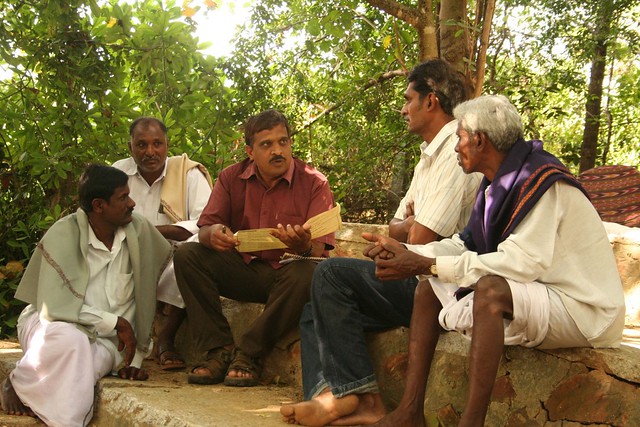
Here's a gist of all that I could gather from these conversations:


These opinions, experiences and insights will be most useful in shaping the stories as examples of how biodiversity can become part of industry, livelihood and lifestyle in the city. Living with bio-diversity is not that hard to achieve, it is merely a matter of how we choose to shape our food systems.

Thursday, August 8, 2013

On Monocultures

Though the greater part of our country is agrarian, it cannot be denied that cities are the heart of economical and cultural exchange. In many ways most consumption trends and patterns are setexamples of how distinct cultures amalgamate in cities to move towards a monoculture...This is not necessarily a bad thing unless this uniformity comes at the cost of a loss of tradition and cultural diversity. Monocultures are created by markets, enter our lives through consumerism and then become embedded in our lifestyles.
in the metros that then percolate to the cities and surrounding towns such as that of processed food, instant meals, imported consumables. The urban population also represents a diaspora, people who live away from their place of origin and migrate to cities for employment opportunities. As a result, cities adopt to provide a uniform experience that can cater to the demands of people from various backgrounds. Individuals from various parts of the country, who would traditionally shop at a weekly haat or at a river side market now shop for the same goods in a supermarket, where they are available to them at all hours of the day. One can cite many such examples.

Why monocultures ?
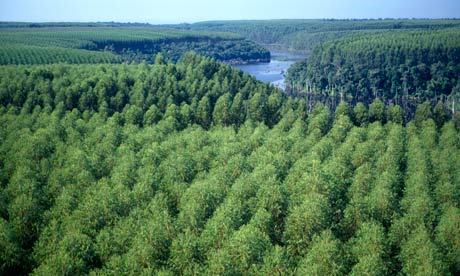
It is clear why monocultures arise. They are cultivated to meet the demands of masses, to increase efficiency and productivity.They also require close monitoring and standardization. Monoculture crops or intensive farming requires more chemical based pesticides and fertilizers to meet the productivity as these crops are not always indigenous to the soil that they are grown in. Not only for food but forest monocultures such as Eucalyptus and Acacia for industrial interests such as for paper-pulp, pose a threat to the water table and endanger other species that are dependent on natural forest cover. Read this for more.

Failure of Monocultures.
One cannot overlook the vulnerability of a Monoculture. If the masses are dependent on the same forces for their needs, it makes them a target for political coercion and control. Monocultures have been associated with violence against the natural order. In agriculture as well as in cities, it is diversity that flourishes in its own capacity without intervention from external forces. 

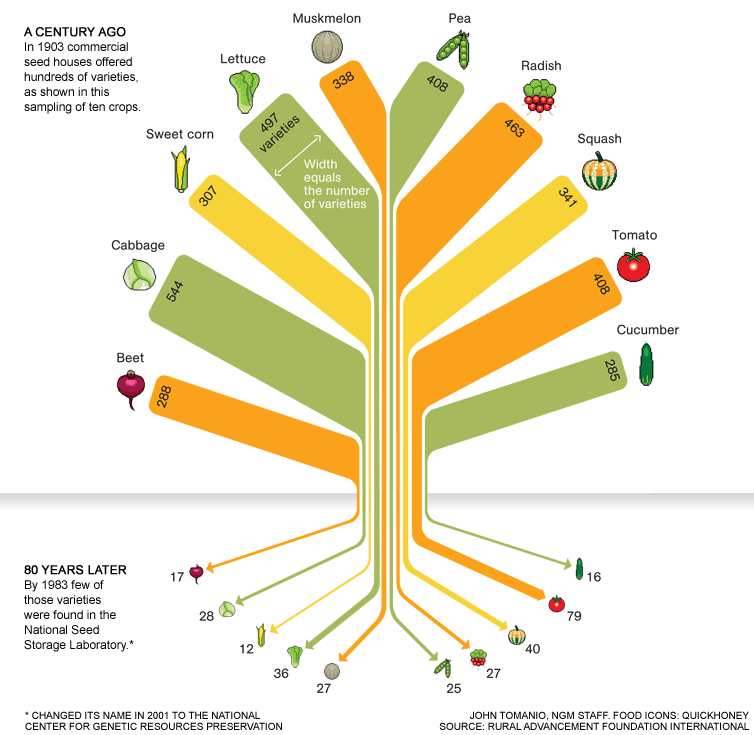
Drawing from the past, the Irish Potato Famine of the 1840's and the Corn Blight Epidemic in the U.S.A. in 1970 that resulted in a loss of over a billion dollars, were both failures of Monocultures that resulted in crop failure, hunger and great financial losses. Neither of these historical instances served as a lesson for a mankind as monocultures continue to be planted in large areas of cultivable land. They are a severe threat to biological diversity as we slowly uproot varieties that naturally inhabit land to replace them with a few species.


 Genetically modified species pose the threat of monocultures at a more dangerous level. G.M. seeds in one culture are not only the same variety of crop but are genetically identical i.e. clones of each other. Each seed has the same level of resistance and compatibility, making them equally vulnerable to pests. Naturally occuring variety in crops allows a survival of the fittest, where certain plants that are more resistant to the disease / pest survive as a fall-back crop for the farmer. 


In India, monoculture and G.M. farming has led to thousands of farmer suicides. The heavy debts and persistent crop failure on chemical dependent farming led to great losses for the farmers. The Bt Cotton plantations in Vidharbha was a horrifying example of how monocultures can lead to destruction, documented in P. Sainath's study and the movie Nero's Guests. Yet, inorganic farming is seen as the most profitable and prevalent, being subsidized by the Government. There is resistance from several farmers and organic farming in India is on the rise but the understanding of organic farming is very different from agro-biodiversity.
Mr. Bhaskar Save is one individual who identified the dangers of inorganic farming early and since the past 60 years has practiced farming based on cultivating diversity, as seen in this documentary.

Here's a comparison of monocultures in cities and in agriculture and characteristics that affect both.
The important words have been highlighted.

In coming posts, we'll look at how farming and consumption are moving towards organic and pro-biodiverse produce and how the shift from monocultures to biodiversity is gradual but possible.

Monday, August 5, 2013

Movements that Inspire - Food Democracy

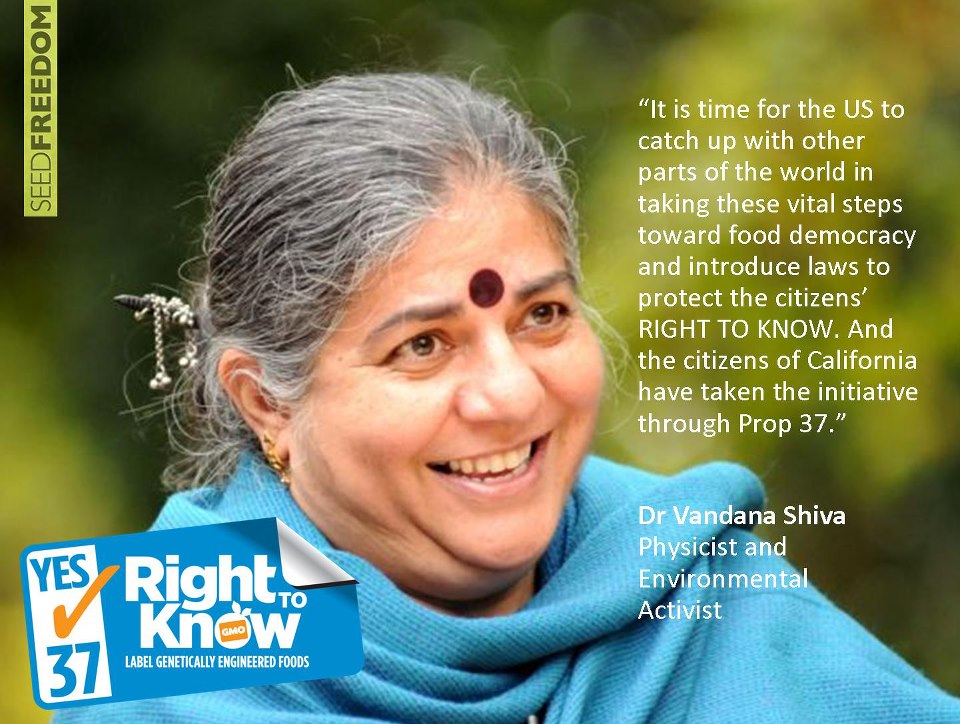
Food Democracy is a concept that brings together farmers, concerned citizens and agricultural scientists. It defines a framework in which the people of a country actively participate in the food system and the policies that surround it. The movement began in the mid-1990s as a response to the increasing corporate control and lack of consumer participation in the food system. To relate this back to biodiversity, it allows farmers to grow local varieties that are otherwise lost in cultivating monocultures, it gives the people the right to say no to genetically modified species and gives them control over traditional knowledge and can choose the direction in which agricultural research should head. Conserving biodiversity thus becomes a collective responsibility, guided by the concern of healthy lifestyles and balanced eco-systems on the farm.


In India,Vandana Shiva is the ambassador for agro-biodiversity and food democracy. Her foundation Navdanya, provides the farmers from the foothills of the Himalayas to conserve plant species in a seed-bank, gives them the opportunity to practice bio-diverse farming and has set up learning centers where traditional and innovative knowledge is exchanged. They have also empowered women across generations, who are the custodians of cultural knowledge and wisdom through the Grandmother's University.


A global initiative that one can draw inspiration from is Excluded Voices. Their food democracy movements across the globe have brought farmers and agricultural scientists together to share knowledge and opinions about the future of agriculture. Participatory videos and maps helped the farmer groups document traditional methods of farming  and endemic varieties of plants and animals. They used role play to understand perspectives of key players in the food production system. Citizen Juries help create a collective voice that demands food sovereignty. They even brought together farmer groups from various countries as a gesture of solidarity and pride. 

Sunday, August 4, 2013

India and Biodiversity

To gain insights about the discussions that surround Biodiversity in India, I read Ashish Kothari's Understanding Biodiversity. The text gives a detailed background of Biodiversity management in India, the threats to Biodiversity and what measures have already been taken. It was a great way of understanding the subject with respect to the diversity that our country harbours based on availability of resources, various livelihoods, cultural differences, disparity in class and addresses the debate on Intellectual Property Rights on traditional knowledge. The book also cites examples of inspiring people and movements that have preserved and maintained biological diversity in India.

A comprehensive and concisely written study on the ecological issues in India from the National, Urban and Agricultural perspectives is Anil Agarwal's Politics of Environment. The study helped me identify a few topics that can be explored further.

The topics identified were:

Diversity gets transformed into Monocultures. This can be said for the cultural diversity in cities and the biological diversity in farms. Furthermore, cultural diversity is born out of biological diversity.

Urban migrants are not economic refugees but ecological refugees, displaced by building of dams, mining, deforestation, etc.

The biggest ally for an ecologically / socially sound environment is Womankind.

We do not yet know how to construct a social / economic / ecological indicator for urban residents to detect depleting biodiversity.

Of these topics, one will be explored further to shape the narrative of the storybook.

Saturday, August 3, 2013

Dimensions of Understanding.

When decoding a complex subject such as Biodiversity, it helps to adopt a new perspective of looking at things. A Whole New Mind is a book by Donald H. Pink that helps me do just that. This book enlists Six Essential Senses that come into play when thinking creatively. These senses are Design, Story, Symphony, Empathy, Play and Meaning.

I've adopted these senses as the dimensions of understanding the design process that can be followed to create a storybook. Since the outcome of the project is defined already, the path to it can be paved using these dimensions. 

Using the six dimensions, I have tried to strategize the process and topics that can be addressed through this storybook in the following mind-map.


These dimensions lend themselves in enriching a designer-user contribution to the project, as seen in the actor's map below.


Monday, July 29, 2013

Why a storybook?

Since its establishment in 2003, NBA has produced several publications that can be accessed by the public. However, these modes of communicating biodiversity have a rigid informational structure. The representation of biodiversity currently is mainly through facts and quantitative data through jargon that may not engage the wider public.

This leaves the need for the wider public to assume their roles in the web of biodiversity unfulfilled. Endangerment of natural resources is caused by consumers who cannot wholly perceive this destruction psychologically. The vast network that is woven around biological resources makes it “humanly impossible for distant consumers to appreciate what their purchasing power is doing to distant areas.” (Anil Agarwal, Politics of Environment). The importance of our choices as consumers and its impact on biodiversity remains yet to be addressed in a digestible and effective form. We remain indifferent to the wide spectrum of reactions that occurs across all sections of society with the slightest change in biodiversity. 


Storytelling is an integral part of how we develop as people and as a civilization by carrying information, cultural code and wisdom.To bead together information in a narrative form is a primal and effective mode of communication and is a practice that pervades all cultures. It goes back to sitting around a bonfire and listening to the elders relate their experiences, packed with wit and metaphors. In this way, stories help connect people.

The power of stories has been identified as having a “high-concept, high-touch essence” by cognitive scientist Don Norman and storytelling has been identified as one of the six fundamental human abilities essential for professional and personal fulfillment by Daniel H. Pink in his book, A Whole New Mindpacking this tool with the potential  to empower its user.

A storybook gives readers characters that they can relate to, scenarios that trigger their imagination and situations that allows them to think alternatively or derive meanings from.

Most importantly, the stories need to be relevant and successful in portraying Biodiversity (and the lack of it) in the lives of the readers and reflect the world around them in its narrative. Only then can we evoke empathy and interest in the matter. Our greatest inspiration can be drawn from the following quote by John Steinbecks:

“If a story is not about the hearer he will not listen . . . A great lasting story is about everyone or it will not last. The strange and foreign is not interesting--only the deeply personal and familiar.”