Showing posts with label consumption patterns. Show all posts

Wednesday, October 16, 2013

Wednesday, August 14, 2013

Conversations

The kind of agriculture being practiced in the country can be largely classified under non-organic farming that involves usage of genetically modified seeds, chemical pesticides and fertilizers and farming that is done organically, the former being the one that is more widely preferred.

Non-organic / synthetic farming is chemical intensive and cultivates monocultures for the benefit of harvesting a greater produce and getting government subsidies. Organic farming, on the other hand, uses no chemical based pesticides or fertilizers but is not supported by government subsidies. The importance of biodiverse farming where nutrients from one crop benefit the ones around it, is one that cannot be appreciated by chemical aided farming. Non-organic farms work towards the growth of a single crop by eliminating the growth of other native or seasonal varieties, poisoning the soil and affecting microbes and insects who form the biodiversity on the farm.

Organic farming is directed towards the use of natural means to meet the needs of pest-control and fertilization of the soil. Biodiversity is a benefit for organic farming through mixed farming as it provides a balanced environment in the farm where different crops support each other around the year, the farmer benefits from a fall back crop in case of a poor harvest of the cash crop and pests are controlled by their predators. What can be inferred from this is how biodiversity can be promoted along with organic farming. To understand if biodiversity is prevalent in organic farming, I decided to look at the organic food system.

Organic food minimizes processing, additives and preservatives. However, it is more expensive as the production costs of organic farming is high and is labour intensive. Though it is recommended for its nutritional values and sustainable principles, organic produce is only afforded and consumed by the higher and upper-middle classes. It was only among these classes that I was able to identify the prevalence of organic food and could discuss the inclusion of biodiversity in their processes:


Places and People:
Fabindia Organics, CMH Road, Indiranagar, Bangalore.
One of the most popular names in organic food in India, Fabindia call their system Inclusive Capitalism, one that gives a fair share of the profit to the farmers and producers. Fabindia introduced me to organic certification.

Phalada Agro Research, Magadi Road, Bangalore.
Phalada Agro process and package the food products sold by Fabindia, 24 Letter Mantra and other organic food industries. Their website mentions a traceability option through which one can get in touch with farmers. Their initiative strives towards "contributing towards the conservation and restoration of biodiversity."

The Farmer's Market - Indiranagar, Bangalore.
The market was a congregation of people who grow and produce organic food and lifestyle products and is held once a month in Indiranagar. I was able to speak to Vishaklakshi of Buffalo Back Organics, who has broken the myth that organic farming cannot meet the productivity attained by non-organic farming. She collaborates with several farmers who maintain biodiverse, organic farms and markets them under her brand.

John Fennessy runs Hamsah Organic Farm in Sarjapur, Bangalore and after the first year of low productivity, his patience was rewarded with a great, green bounty in the years to follow. According to him, his only pest-control is biodiversity. The farm has developed an eco-system in which each pest has it's own predator and the produce does not suffer. He uses herbal pesticides such as neem extract instead of chemicals.

Finally, Govind Shivkumar, Investment Manager at LGT Venture Philantrophy, had lots of useful information to share about consumption patterns in cities. He maintains that it is not a matter of quantity but quality of food that affects the health and well-being of city dwellers. Processed food is largely consumed while horticulture is in the decline. Farm area around cities that was used for growing fruits and vegetables is now being used for building townships. As a result, fresh fruits and vegetables are absent from our daily consumption and are sold at prices that cannot be afforded by all.

Here's a gist of all that I could gather from these conversations:


These opinions, experiences and insights will be most useful in shaping the stories as examples of how biodiversity can become part of industry, livelihood and lifestyle in the city. Living with bio-diversity is not that hard to achieve, it is merely a matter of how we choose to shape our food systems.

Tuesday, August 13, 2013

Consumption Patterns

A simple way of understanding the link between us and the food we eat is to observe the forces involved:
There is no particular stage that controls what is grown and what is eaten, it can be seen as a dynamic system. What we demand as consumers is what the farmer is compelled to grow and the market to supply.
On the other hand, we can only stock up in our cellars what is available in the market. A useful way to observe this system and how it affects society is through consumption patterns, in which all three forces are visible. To achieve this I accessed the National Sample Survey of India and various articles and discussions such as this one that observe the changing habits and patterns in our food consumption.

One of the main inferences from the NSSO was the fall in demand for coarse cereals (ragi, jowar, bajra, millets) observed across all classes in society. Also, there is a shift towards processed food among both rural and urban consumers as the consumption of fresh vegetables and fruits has declined. Without a doubt, the change in food consumption has an effect on the health and well-being of society. The coarse cereals have served as a source of micro-nutrients in various forms across India. Fresh fruits and vegetables are the only natural source for vitamins and minerals, the deficiencies of which are evident among the lower class who cannot afford to purchase them. And processed food, rich in sugar, salt, fat and preservatives has shown its impact through rise in cardiac diseases, diabetes and obesity.

A healthy, balanced diet is one that involves an intake of a variety of foods in their appropriate portions. As important as diversity is in nature, it is vital in our diet in the form of Dietary Diversity. Our country, with its varied soil and climate distribution can cultivate this diversity and meet our dietary needs. However, the ill-health rampant in the country stand witness to the fact that there is great disparity in accessibility to a healthy diet. A monoculture diet as opposed to a diverse diet can be observed in all classes of society. For one, rice and wheat have become the only cereals that are widely consumed. Not only do they fail to compensate for the nutritional value of millets, they are also expensive to become a part of the households of economically weak.
 The matter of concern is that the availability of millets and the land usage for their cultivation is diminishing. At a political level, the Public Distribution System largely distributes only rice and wheat as cereals, forcing a monoculture in both the fields and the diet. The conservation of millets and their consumption on a larger scale is a necessity to maintain agrobiodiversity. Millets have a greater capacity to grow in harsh conditions as opposed to rice and wheat that require continuous irrigation and fertilizers to grow as a monoculture in incompatible conditions.

In recent times, millets are being promoted and revived (read here) in an attempt to draw attention to their health benefits and decline in consumption. They are also emerging as a trend among the elite and the health conscious, at higher prices. As can be read in this article, it is a foolish act on our parts to have forgotten the importance of a diverse diet and the richness of millets, and instead turn first towards cereals rich in sugars and carbs and then towards expensive health fads when the answer to well being was always the inclusion of the array of millets that our land has to offer. To really appreciate the change in diet over the years, here's a blogpost worth reading.

Thursday, August 8, 2013

On Monocultures

Though the greater part of our country is agrarian, it cannot be denied that cities are the heart of economical and cultural exchange. In many ways most consumption trends and patterns are setexamples of how distinct cultures amalgamate in cities to move towards a monoculture...This is not necessarily a bad thing unless this uniformity comes at the cost of a loss of tradition and cultural diversity. Monocultures are created by markets, enter our lives through consumerism and then become embedded in our lifestyles.
in the metros that then percolate to the cities and surrounding towns such as that of processed food, instant meals, imported consumables. The urban population also represents a diaspora, people who live away from their place of origin and migrate to cities for employment opportunities. As a result, cities adopt to provide a uniform experience that can cater to the demands of people from various backgrounds. Individuals from various parts of the country, who would traditionally shop at a weekly haat or at a river side market now shop for the same goods in a supermarket, where they are available to them at all hours of the day. One can cite many such examples.

Why monocultures ?
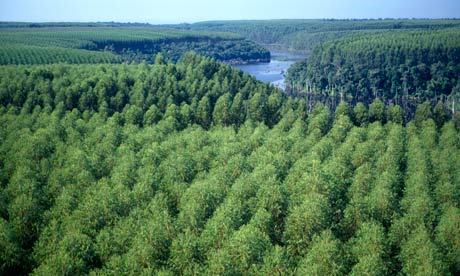
It is clear why monocultures arise. They are cultivated to meet the demands of masses, to increase efficiency and productivity.They also require close monitoring and standardization. Monoculture crops or intensive farming requires more chemical based pesticides and fertilizers to meet the productivity as these crops are not always indigenous to the soil that they are grown in. Not only for food but forest monocultures such as Eucalyptus and Acacia for industrial interests such as for paper-pulp, pose a threat to the water table and endanger other species that are dependent on natural forest cover. Read this for more.

Failure of Monocultures.
One cannot overlook the vulnerability of a Monoculture. If the masses are dependent on the same forces for their needs, it makes them a target for political coercion and control. Monocultures have been associated with violence against the natural order. In agriculture as well as in cities, it is diversity that flourishes in its own capacity without intervention from external forces. 

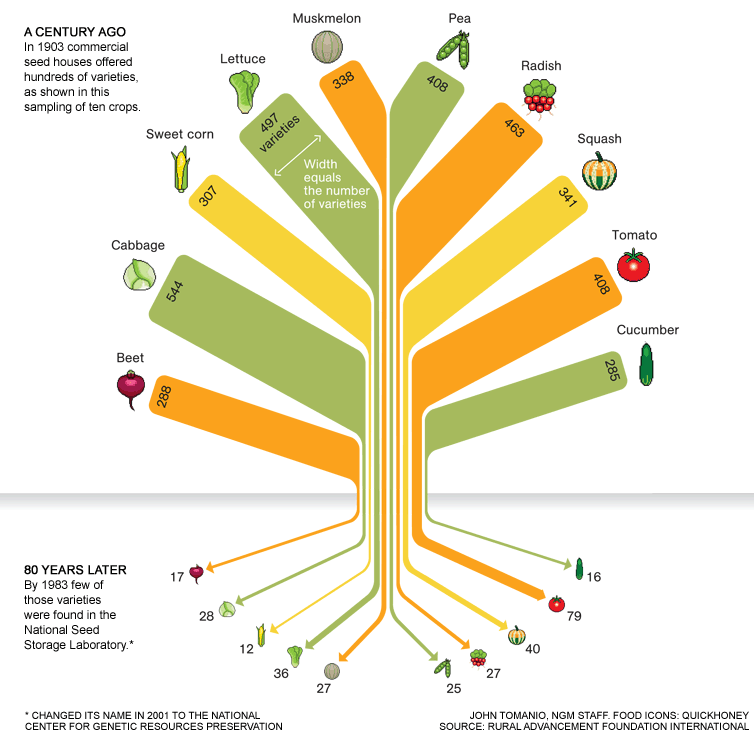
Drawing from the past, the Irish Potato Famine of the 1840's and the Corn Blight Epidemic in the U.S.A. in 1970 that resulted in a loss of over a billion dollars, were both failures of Monocultures that resulted in crop failure, hunger and great financial losses. Neither of these historical instances served as a lesson for a mankind as monocultures continue to be planted in large areas of cultivable land. They are a severe threat to biological diversity as we slowly uproot varieties that naturally inhabit land to replace them with a few species.


 Genetically modified species pose the threat of monocultures at a more dangerous level. G.M. seeds in one culture are not only the same variety of crop but are genetically identical i.e. clones of each other. Each seed has the same level of resistance and compatibility, making them equally vulnerable to pests. Naturally occuring variety in crops allows a survival of the fittest, where certain plants that are more resistant to the disease / pest survive as a fall-back crop for the farmer. 


In India, monoculture and G.M. farming has led to thousands of farmer suicides. The heavy debts and persistent crop failure on chemical dependent farming led to great losses for the farmers. The Bt Cotton plantations in Vidharbha was a horrifying example of how monocultures can lead to destruction, documented in P. Sainath's study and the movie Nero's Guests. Yet, inorganic farming is seen as the most profitable and prevalent, being subsidized by the Government. There is resistance from several farmers and organic farming in India is on the rise but the understanding of organic farming is very different from agro-biodiversity.
Mr. Bhaskar Save is one individual who identified the dangers of inorganic farming early and since the past 60 years has practiced farming based on cultivating diversity, as seen in this documentary.

Here's a comparison of monocultures in cities and in agriculture and characteristics that affect both.
The important words have been highlighted.

In coming posts, we'll look at how farming and consumption are moving towards organic and pro-biodiverse produce and how the shift from monocultures to biodiversity is gradual but possible.